The Bomber Jacket and the Shape of Contained Air
B
BUYIT Journal· Fashion history notes
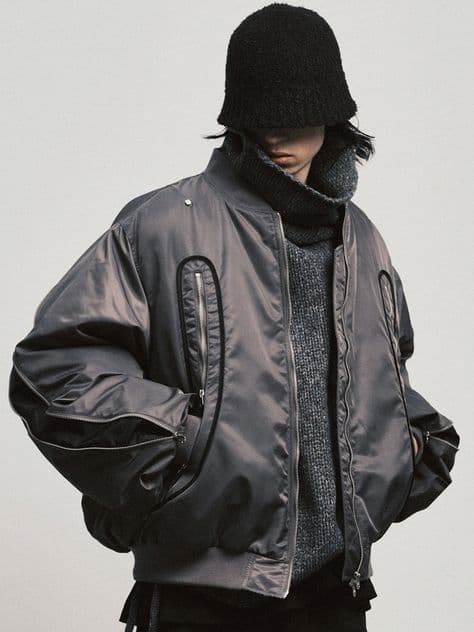
A bomber jacket changes the body by adding volume, then trapping it neatly at the edges. The shoulders round. The torso gains air. The hem pulls in at the waist. Ribbed cuffs hold the sleeves close. The jacket looks inflated but controlled, casual but engineered. That balance comes from its history in aviation, where warmth, mobility, and compactness mattered before style did.
Flight jackets developed through practical needs: pilots and aircrew needed protection from cold, wind, cramped cockpits, and changing conditions. Leather, shearling, nylon, ribbing, zippers, and pockets all entered the vocabulary of military and aviation clothing in different periods and forms. The bomber jacket as fashion does not come from one single garment, but from a family of flight jackets that made function visually memorable.
The MA-1, with its nylon shell and ribbed edges, is one of the most influential forms. Its smooth surface and rounded body made it adaptable far beyond military use. Earlier leather flight jackets carried a heavier, more rugged romance. Together, these jackets gave civilian fashion a new kind of outerwear: short, practical, technical, and full of attitude without needing length or tailoring.
The bomber's silhouette is its main language. Unlike a blazer, it does not draw a clean line from shoulder to hip. Unlike a long coat, it does not lengthen the body. It creates a compact upper volume. This can make the legs look longer, the shoulders softer or broader, and the waist more defined depending on fit. The ribbed hem is not a minor trim. It decides where the jacket stops and how the volume gathers.
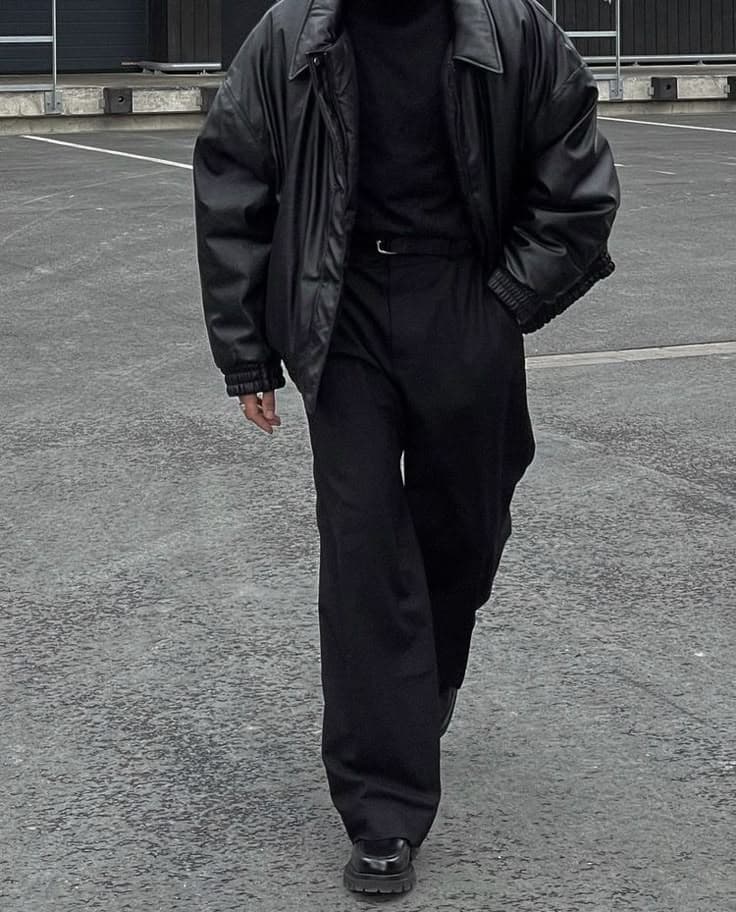
Materials change the reading immediately. Leather brings weight and a connection to early flight, motorcycles, and cinema. Nylon feels lighter, more technical, and more connected to postwar military surplus and streetwear. Satin versions can look almost souvenir-like, especially with embroidery. Wool versions soften the military code. Technical fabrics push the bomber toward sportswear and utility.
The bomber jacket entered youth and subcultural wardrobes because it had the right combination of availability and force. Military surplus clothing often carries authority after it leaves official use, but that authority can be redirected. On different bodies and in different scenes, the bomber has read as rebellious, practical, political, sporty, minimal, aggressive, or luxurious.
That range is not always comfortable. Some bomber styles have been associated with specific subcultures and political meanings, while others have become mainstream basics. The garment's military origin and later street adoption mean it can never be completely innocent. Fashion often likes the shape before it fully accounts for the signals attached to it.
In everyday styling, the bomber is powerful because it shortens outerwear. A long coat covers an outfit. A bomber interrupts it at the waist. It works over a T-shirt, hoodie, shirt, knit, slip dress, or wide trousers because it adds a defined top layer without swallowing the lower half. It makes clothing feel more mobile.
The zipper also matters. A buttoned jacket closes in stages; a bomber zips with a single line. Half-zipped, it creates a V of fabric and reveals the layer underneath. Fully zipped, it becomes more sealed and protective. Open, it frames the torso while the ribbed hem still shapes the bottom edge. The garment is built for quick adjustment, and that quickness remains visible.
Pockets are part of its physical character. Sleeve pockets, flap pockets, interior pockets, and side pockets all suggest storage and readiness. Even when unused, they break up the surface and remind the viewer that this jacket once had jobs to do. A bomber with no useful pockets can look oddly decorative because the form expects function.
The modern oversized bomber exaggerates the jacket's original volume. Dropped shoulders and wider bodies turn practical air into fashion space. The wearer looks less fitted and more surrounded. This can make the jacket feel protective, but also theatrical. A cropped bomber does the opposite, sharpening the waist and making the garment more graphic.
The bomber survives because it gives casual clothing structure without making it formal. It can carry a plain outfit. It can make a dress less delicate. It can make tailoring less serious. It works across seasons because versions can be padded, lined, lightweight, or heavy. Few outerwear shapes are so recognizable with so few elements: zip front, ribbed edges, short body, rounded volume.
What makes the bomber interesting is that it turns air into silhouette. The space between body and shell is the design. That space once helped with movement and warmth. Now it also gives attitude. The jacket does not simply cover the wearer. It creates a perimeter around them.
The bomber also has a strong relationship with lining. Some versions reveal bright orange, quilted interiors, or contrast fabrics when opened. The inside becomes part of the garment's story: emergency visibility, warmth, comfort, or simply the pleasure of a hidden color. A bomber is often most interesting in the moment it is unzipped.
Because the jacket ends at the waist or hip, it affects what happens below it. With high-waisted trousers, it can create a compact, strong proportion. With low-slung jeans, it stretches the torso. Over a dress, it changes the dress from one continuous line into a layered outfit. The bomber's shortness is practical and compositional at once.
The jacket's popularity in streetwear also comes from customization. Patches, embroidery, squadron references, souvenir motifs, and brand marks all sit naturally on the surface. The bomber can be plain, but it can also become a record of belonging, travel, music, or imagined affiliation.
A good bomber keeps tension between softness and edge. Too limp and it loses the flight-jacket memory. Too stiff and it becomes costume. The successful version keeps enough structure to hold air around the body while still allowing the wearer to move.
Related articles
May 20, 2026
April 6, 2026
January 7, 2026
July 14, 2025