The Wrap Dress and the Practicality of a Moving Waist
B
BUYIT Journal· Fashion history notes
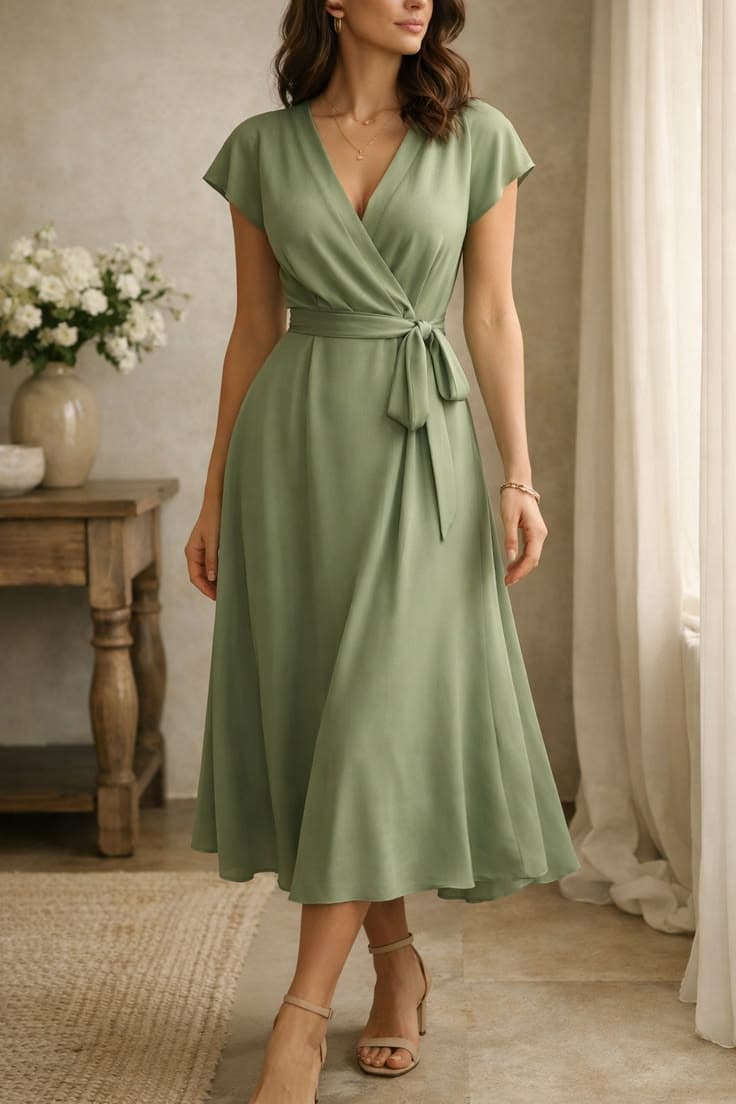
A wrap dress is built around an action. One side crosses the body, the other side meets it, and the waist is tied into place. The gesture is simple enough to do without much thought, but it changes the whole feeling of the garment. The dress is not entered and sealed like a sheath. It is arranged around the body.
That arrangement explains the wrap dress's long appeal. It offers shape without the fixed architecture of heavy tailoring. It can define the waist while allowing the body to breathe, sit, walk, and change. The neckline forms through overlap. The skirt opens through movement. The tie can be adjusted. A good wrap dress understands that bodies are not static objects.
Diane von Furstenberg's 1970s wrap dress is the most famous modern example, especially in printed jersey. Its success was tied to a period when many women wanted clothes that could move between work, social life, sexuality, and independence without requiring elaborate dressing. The dress was easy to put on, easy to wear, and visually direct.
But the wrap principle is older than one designer. Robes, kimonos, dressing gowns, aprons, and many traditional garments use overlap and ties. What made the modern wrap dress distinctive was the way it turned that practical logic into a fashionable, body-conscious garment for public life. It borrowed the ease of something tied at home and sent it into offices, restaurants, and streets.
The fabric matters. In jersey, the wrap dress follows the body and returns after movement. A woven wrap dress can feel crisper and more architectural. Silk makes the overlap fluid; cotton makes it casual; matte jersey makes it practical; a print can hide the shifting lines of the tie and fold. The same pattern changes dramatically with material.
The V neckline is one of the dress's strongest features. It frames the neck and chest through construction rather than decoration. On some bodies it feels open and lengthening; on others it requires adjustment or a camisole. That variability is part of the garment's honesty. The wrap dress is flexible, but not universally effortless. It asks the wearer to decide how much closure, exposure, and movement feels right.
The tie is both functional and symbolic. It creates the waist, but it also makes the wearer a participant in the garment's final shape. Tie it tighter and the dress becomes more defined. Tie it looser and it relaxes. Place the knot at the side, front, or back, and the emphasis changes. The dress is finished on the body, beyond the hanger.
That quality helped the wrap dress become associated with independence. It looked polished without needing a second person, complicated fastening, or rigid understructure. It could be packed, worn, washed, and repeated. In the 1970s context, that practicality mattered. The dress fit a life where women were moving through professional and personal spaces with new expectations placed on clothing.
The wrap dress also works because it creates diagonal lines. The crossed front moves the eye across the torso. The tie interrupts the waist horizontally. The skirt may open or overlap as the wearer walks. These diagonals give the dress motion even when standing still. Compared with a straight shift, the wrap dress is full of directional cues.
Its risks come from the same features. The neckline can gape. The skirt can open in wind. The tie can sit awkwardly. A poor fabric can cling in the wrong places. A badly placed waist can shorten the torso. The wrap dress is often praised as universally flattering, but that phrase is too easy. The best versions flatter because their proportions are carefully tuned.
Modern fashion keeps returning to the wrap because it solves a persistent problem: how to make a dress that feels feminine, adjustable, and useful without becoming either stiff or shapeless. It can be office-appropriate in one fabric, beachlike in another, evening-ready in another. It can look retro, bohemian, minimal, or sharp depending on print and cut.
What makes it endure is the relationship between control and release. The wrap holds the body, but not completely. It gives the wearer a waist, but lets the fabric move. It offers polish, but shows the hand of dressing. You can see how it closes. You can imagine how it opens. That visible logic makes the dress feel human.
The wrap dress is not important because it solved dressing forever. No garment does. It is important because it made adjustability look elegant. It showed that ease could be constructed, that practicality could have a line, and that a dress could be powerful because it allowed the wearer to finish it.
Print helped the wrap dress become memorable. A solid wrap dress shows the construction clearly; a print lets the folds and ties become more fluid. Patterns can disguise overlap, soften cling, and make the garment feel lively without adding extra pieces. This is one reason printed jersey became so closely linked to the wrap's public image.
The dress also changed the relationship between day and evening. It could look professional with boots or pumps, then become more intimate with jewelry and an open neckline. That flexibility was not accidental. The garment offered women a way to move through different spaces without changing into a completely different identity.
Its reputation as flattering comes from diagonal control. The crossed front and tied waist create movement across the torso rather than a hard horizontal cut. But good design still matters. The waist tie must sit where the body can use it. The skirt needs enough overlap to move safely. The fabric must recover after sitting.
When those details work, the wrap dress feels less like a fixed garment and more like a method of dressing. It acknowledges that the body changes from morning to evening, from standing to sitting, from stillness to walking.
Related articles
February 20, 2026
June 22, 2025
January 18, 2025