Why the Little Black Dress Still Does Not Feel Small
B
BUYIT Journal· Fashion history notes
The phrase "little black dress" sounds modest. It suggests a garment that knows how to stay out of the way: short enough, plain enough, reliable enough. But the best little black dresses have never been small in effect. They clear visual space around the wearer. They make the face, hands, shoes, jewelry, posture, and room matter more. Their simplicity is not the absence of design. It is design that knows when to stop.
Black clothing carried many meanings before the modern little black dress took shape. It could signal mourning, service, religious discipline, formality, wealth, or restraint depending on fabric and context. Black dye was not always visually simple or inexpensive; deep, stable black could be technically and socially loaded. By the early twentieth century, however, the meaning of black in women's dress was changing. Urban life, modern work, and new ideas of elegance made restraint look current rather than merely severe.
Gabrielle Chanel is often placed at the center of the little black dress story, especially because of the 1920s design famously discussed in American Vogue. But the larger shift was not created by one garment alone. It depended on a change in silhouette, lifestyle, and taste. Women's clothes were becoming less dependent on heavy decoration and rigid historical references. The body line of the 1920s was straighter and easier than many earlier ideals. A black dress could now look modern rather than funereal if its cut was simple, its fabric responsive, and its styling deliberate.
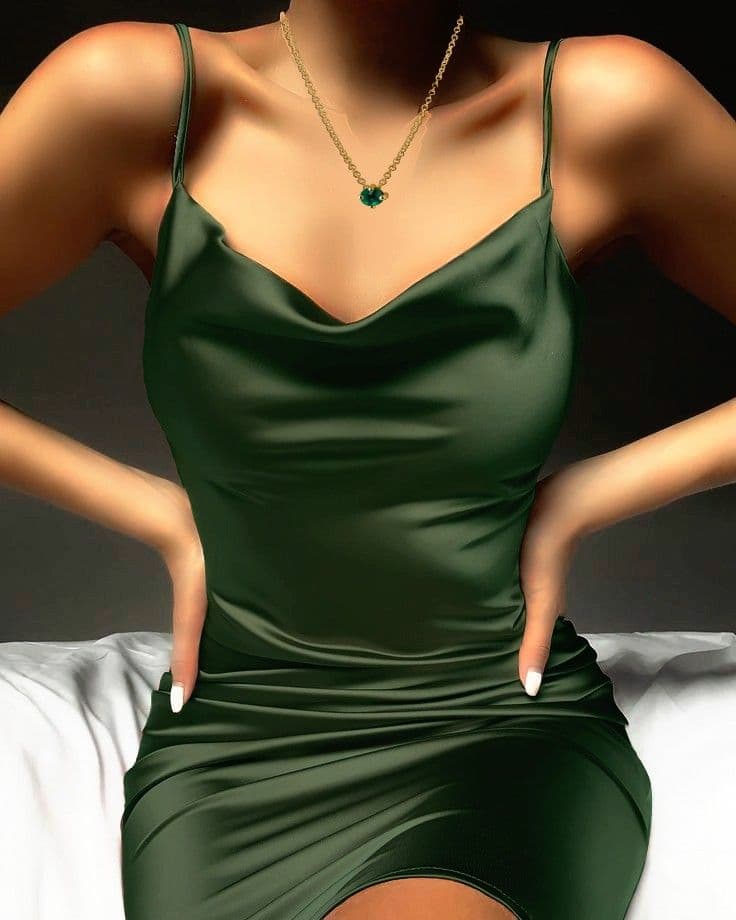
What made the little black dress powerful was the way it converted limitation into possibility. Color was removed, so shape had to carry the message. Ornament was reduced, so proportion became visible. A sleeve, neckline, hem, waist seam, or fabric choice could change the whole reading. A black crepe dress with a dropped waist did not say the same thing as a black satin slip dress, a jersey wrap, or a sharp cocktail dress. The category stayed stable because the idea was flexible: one dark garment, cut with enough clarity to travel between moments.
This is why the "little" in the name can be misleading. A little black dress is rarely only about size. It is about compression. It takes many social needs and folds them into one object. Dinner, theater, office, mourning softened into formality, travel, party, last-minute invitation: the dress promises to handle the uncertainty. It does not solve every dress code, but it often buys time.
The dress also changed the role of accessories. Against black, a pearl necklace looks brighter, a red lip sharper, a metallic shoe louder, a bare shoulder more deliberate. The garment becomes a ground. It allows other details to enter and leave without making the outfit feel rebuilt from nothing. That is part of its modernity. It treats style less as a fixed costume and more as an adjustable system.
Film deepened the myth. On screen, black reads as shape, shadow, and mood. It can make a dress graphic even when the fabric is soft. Audrey Hepburn's black dresses, including the famous Givenchy look in "Breakfast at Tiffany's," helped make the idea feel both polished and strangely available. Viewers were looking at a fantasy as much as a dress: the fantasy that the right plain thing could make a person composed.
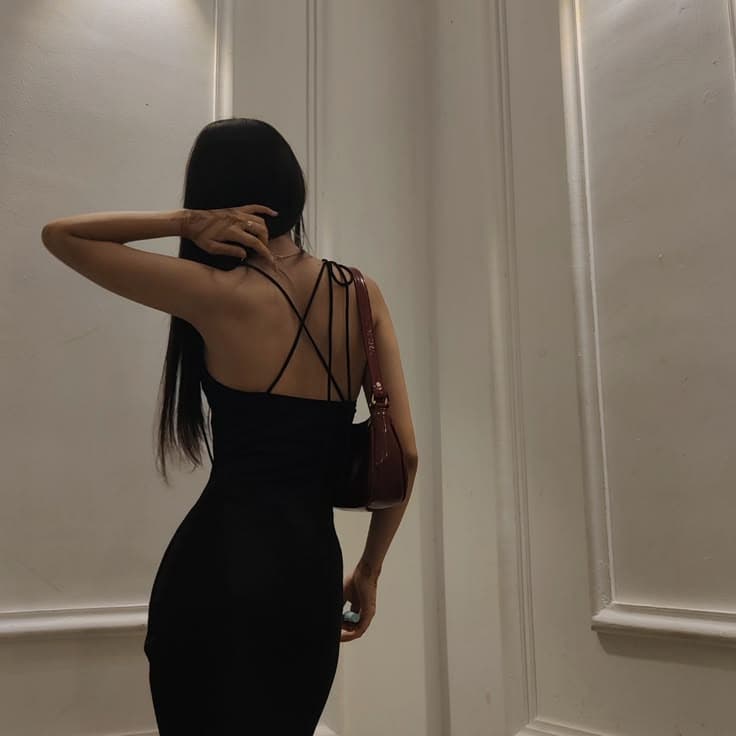
The little black dress survives because it understands anxiety. It lives in the space between wanting to be noticed and not wanting to look overprepared. It can be modest or revealing, quiet or theatrical. It can let the body disappear into line, or it can make every movement legible. A black dress cut close to the body carries a different pressure than a loose one. A matte fabric absorbs light; satin returns it. A high neckline closes the frame; a low back changes the room when the wearer turns away.
That physical behavior matters more than the phrase "wardrobe essential" usually admits. The wrong black dress is not magic. It can be dull, harsh, badly proportioned, or too tied to one occasion. The right one works because the cut understands the wearer. It allows breathing room in the places that move, structure in the places that need holding, and enough blankness for the person to remain visible.
Modern fashion keeps returning to the little black dress because it is one of the clearest examples of clothing as editing. It edits color. It edits decoration. It edits the number of decisions required before leaving the house. But it also exposes decisions that cannot be hidden: length, fit, neckline, fabric, shoe, posture. The simplicity does not remove judgment. It concentrates it.
That is why the little black dress still feels current even after endless reinvention. It is not a single historical design preserved in glass. It is a rule that each generation tests again: how little can a dress say while still changing how the wearer is seen?
The LBD also changed how women could repeat clothing. A highly decorative dress is remembered quickly; a black dress can be reintroduced through different styling. Change the shoes, add a jacket, alter the jewelry, shift the hair, and the dress appears to have adjusted to the occasion. This repeatability made it modern in a practical sense, an aesthetic one.
There is also a class story hidden inside the black dress. Simplicity can be democratic, but it can also be demanding. Plain black fabric shows cut, quality, and fit with unusual clarity. A cheap seam, poor hem, or lifeless textile has fewer distractions to hide behind. The dress may promise accessibility, but its best versions depend on judgment: the right weight, the right fall, the right amount of blankness.
The little black dress is therefore not a uniform for disappearing. It is a tool for controlling attention. Sometimes it makes the wearer look discreet; sometimes it makes the body more visible because everything around it has been removed. The paradox is useful: the dress is quiet enough to be repeated and strong enough to be remembered.
Related articles
February 20, 2026
October 11, 2025
June 22, 2025